Who We Are & Purpose
Welcome to the Hong Kong Society of Algorithms and Computing Technology (HKSACT), a professional body of algorithms and computing technology professionals. HKSACT is a non-profit professional association of educators, scientists, engineers, technicians, and students engaged in algorithms and computing technology.
The purpose of this Society is to advance the knowledge and application of algorithms and computing technology; to establish and maintain standards of qualification for membership; to promote and maintain high standards of competence and conduct for members; to promote awareness of the profession.
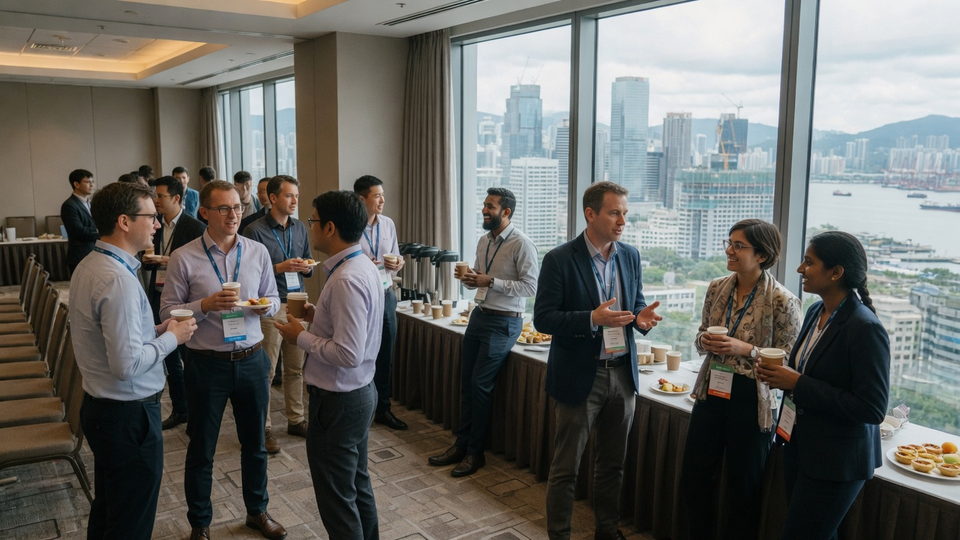
HKSACT holds various regular events, including its International Conferences as well as numerous regional conferences.
About Algorithms and Computing Technology
Algorithms are widely used in industry to improve efficiency, accuracy, and decision-making. Key applications include:
Algorithms are used to optimize production processes and supply chain management, reducing waste and increasing efficiency.
Algorithms are used to analyze financial data and make predictions, enabling traders and investors to make informed decisions.
Algorithms are used to process and analyze medical images, assist in diagnosing diseases, and optimize treatment plans.
Algorithms are used for customer relationship management, personalized product recommendations, and pricing optimization.
Algorithms are used to optimize routes for delivery and transportation, reducing fuel consumption and increasing delivery speed.
Algorithms are used to forecast demand, schedule generation, and integrate renewable supply, improving the reliability and efficiency of power and water utilities.
Algorithms in Computing
Algorithms are fundamental to computing. Key needs and applications include:
Algorithms give the formal account of what can be computed and at what cost. Complexity analysis, approximation and randomised methods, and combinatorial optimisation allow mathematical, scheduling, and decision problems to be solved within realistic time and memory budgets.
Algorithms organise and analyse data at scale: sorting, searching, hashing, streaming summaries, and compression provide the primitives on which data pipelines and higher-level software are built.
Algorithms train and deploy intelligent systems, including machine learning, natural language processing, computer vision, and reinforcement learning, together with the evaluation and inference procedures that make such models reproducible.
Algorithms generate and interpret visual data: rasterisation and ray tracing, geometric modelling, image and mesh compression, and image enhancement used in visualisation, simulation, and medical or industrial imaging.
Algorithms keep large collections consistent and queryable, through indexing structures, query planning and optimisation, transaction scheduling and concurrency control, and the storage layouts behind analytical and distributed databases.
Algorithms keep systems correct under concurrency and scale: routing, congestion control, error detection and correction, replication and consensus, and the process scheduling, memory management, and storage allocation performed by operating systems.
Academic Ethics, Privacy, and Terms of Governance
Academic Ethics Code
Members, authors, reviewers, and conference organisers of HKSACT are expected to practise honest scholarship. Fabrication, falsification, plagiarism (including self-plagiarism), undisclosed conflicts of interest, and coercive citation are grounds for rejection of a manuscript, retraction of a published paper, and, in serious cases, termination of membership.
Conference and journal submissions are evaluated by peer review. Reviewers must keep manuscripts confidential and must recuse themselves when they cannot be impartial. Authors must list all contributors who meet authorship criteria and must obtain permission to reuse third-party figures or data.
Privacy Policy
HKSACT collects only the information needed to administer membership, conference registration, journal correspondence, and philanthropic pledges (typically name, affiliation, email, and, where you provide it, postal address). We do not sell personal data. Contact details are used to send Society notices you have requested or that are required to complete an application.
Donation pledges submitted through this website may be relayed by a third-party form service (FormSubmit) to membership@hksact.org. Do not include payment-card numbers on the web form. Bank coordinates are issued privately after a pledge is confirmed. If a pledge cannot be sent, a copy of the details you entered is kept in your own browser's local storage so that the form can be retried; that copy stays on your device and is removed when you clear your browser data.
To correct or delete your record, write to membership@hksact.org. This notice describes current practice of a learned society website; it is not a substitute for legal advice under the Hong Kong PDPO.
Terms of Governance
HKSACT is a non-profit society registered in Hong Kong (Hong Kong Societies Reg. No.: 76398435-001-04-24-6). Academic grades, conference acceptance, and journal decisions are made by volunteer committees. Website content is provided for scholarly information; conference dates and indexing status should be confirmed with the secretariat before you travel or submit a manuscript.
Support HKSACT
You can donate to the HKSACT, be it to a specific project or to HKSACT's general operating budget. All support makes a difference, and donations of any size are highly appreciated.
Donation projects
- Introductory Lecture Series — public video lectures
- Bursaries for Students — conference fees and travel
- Honorarium for Educators — keynote speakers and mentors
- General Donation — Society operating budget